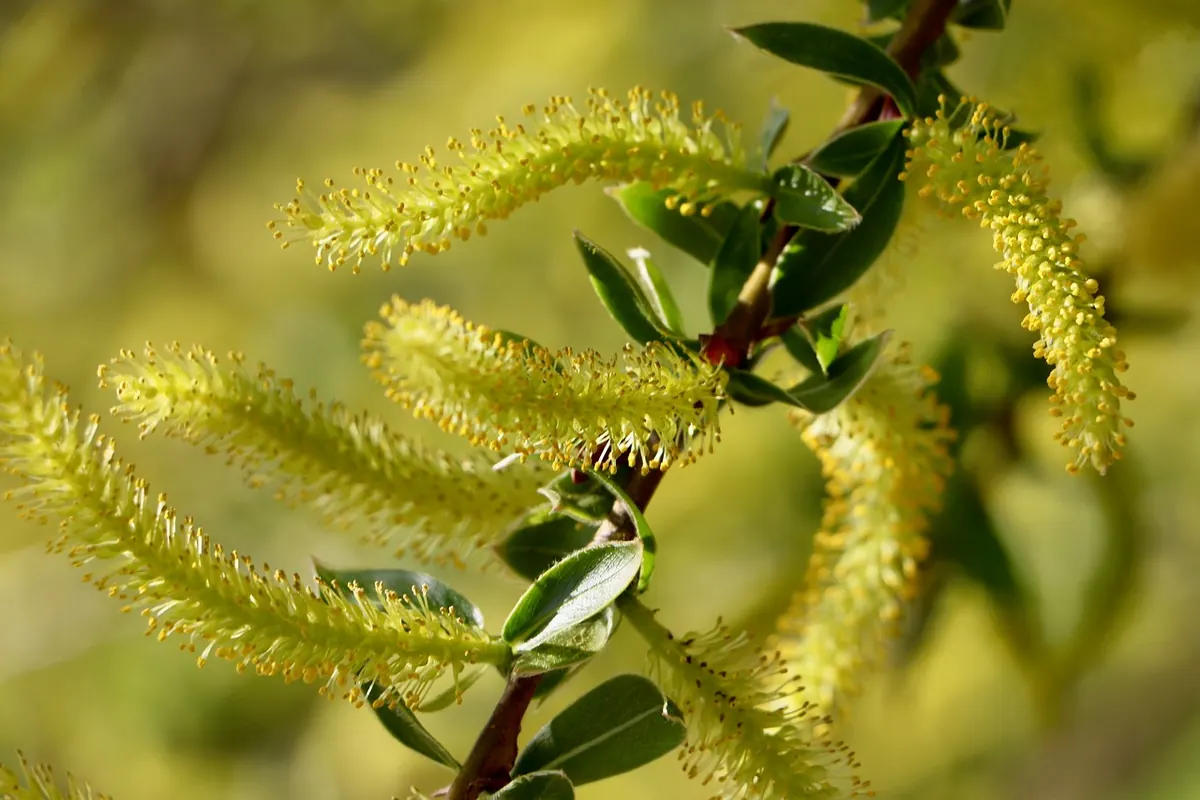
Field Comparison: Journaling a Willow in Spring Versus Autumn
Journal the same willow twice in a year: what to record on spring catkins and leaf burst, what to note in...


A temperate garden runs on a schedule of small, repeatable events: the first hazel catkin, the week the lawn stops growing, the evening the slugs find the seedlings before you do. None of it is dramatic. All of it is datable. A journal that follows the year page by page turns those events into something you can compare — this April against last April, this frost against the one three winters ago — and comparison is where the real pleasure sits.
What follows is a prompt calendar, not a rulebook. Use it in order, use it out of order, or use it to rescue a notebook you abandoned in May.
Most seasonal journals collapse in February. They ask for a daily page, and a garden in January offers very little to fill it, so the blank days pile up and the whole project starts to feel like a second job. The fix is simple: one page per month, five lines minimum, and permission to write "rained, nothing moved" and close the book.
Pick a notebook that opens flat and tolerates damp. A pencil survives drizzle and cold fingers; most pens do not. Keep it near the door or beside the kettle, wherever you already pause. Then give every monthly page the same five fields, so the year compares cleanly against itself:
Leave a margin down the outer edge of every page. In it, mark anything worth returning to: a folded corner, a small pencil cross, the word again. A garden journal is read backwards far more often than it is read forwards, and the margin is what makes that possible.
Winter is the season for structure. Without leaves, the garden shows the shape you spend the summer pruning half-blind: the leaning branch, the gap in the hedge, the shrub that has quietly outgrown its corner. Draw or photograph from a fixed point — the kitchen window, the gate — so that this month's view can be laid against June's.
Spring is when observation gets expensive, because everything happens at once. Resist the urge to record it all. Choose a route — twenty paces of border, one hedge, a single tree — and walk it at the same time each week.
April. Note the date the oak breaks, the last frost, and which blossom it caught. If you sow seed, write the sowing date and the germination date side by side; after two years those pairs tell you more about your own garden than any seed packet. Track the colour of new leaves, which is rarely the green you remember: copper, bronze, a soft grey.
May. The month to write the flowering sequence — bluebell, cow parsley, hawthorn, elder — as a list with dates. Then do something the field guides cannot: record which flowers the bees actually visit in your garden, and how long they stay. Sit for ten minutes and follow one insect. Note scent in the evening rather than at noon.
June. The longest day deserves its own entry: what time can you still read the page outdoors? Fledglings arrive, aphids arrive, ladybirds follow. Record the first watering and the first day the lawn goes pale at the edges.
The journal will thin out now, and that is honest rather than lazy. Heat flattens the day; observe at dusk instead.
Autumn rewards the recorder because it moves quickly and visibly. Collect seed and write the date of collection, not just the name. Dew-heavy mornings show every spider's web in the border; note where they cluster and what they are strung between.
October is the month for leaf fall. Choose three trees and record the date each begins to turn, the date it peaks, and the date it is bare. Note the first frost precisely — the first one is a date you will want next spring when you are deciding what to plant. Plant bulbs and write where they went, because you will not remember.
November returns you to the skeleton. Take out the January sketch and set it beside a fresh one. Look at bare soil, worms, leaf litter, the first fungi pushing through wet grass. Where the garden is tired, write down why you think so; where it is not, write that too.
Go out on the shortest day, even for five minutes, and note the light. Then come in and do the one task that makes the whole calendar worth keeping: lay the twelve monthly pages side by side and read them as a year rather than a diary.
Set a reminder for the same week next December. A calendar of prompts is only a scaffold; the value sits in the fourth or fifth year, when you can open the book to a month and know exactly what your garden was doing on that date — and what it is doing differently now.
Photo: Pexels / Pixabay
Journal the same willow twice in a year: what to record on spring catkins and leaf burst, what to note in...
A seven-day journaling project that tracks temperature, rain, wind and wildlife on the same route at the...
A twenty-minute garden routine that gets children looking closely: simple prompts, quick drawing tasks,...